Standing Desk vs Sitting Desk: Which Is Right for You? (2026)
The standing desk has gone from novelty to mainstream, and if you are setting up a home office you have probably wondered whether it is worth the upgrade over a traditional sitting desk. The honest answer is that neither is universally “better” — the right choice depends on your body, your work, and your habits. This guide compares them fairly so you can decide with confidence.
The Case for Sitting Desks
Traditional sitting desks are affordable, stable, and familiar. They offer a rock-solid surface with no wobble, cost far less than adjustable models, and require no adjustment or electricity. For focused, detail-oriented work where you stay put for long stretches, a good sitting desk paired with an ergonomic chair is a perfectly healthy setup.
The catch is that prolonged sitting — especially with poor posture — is linked to back pain and stiffness. The fix is not necessarily a standing desk; it is a supportive chair and regular movement. A quality ergonomic office chair does more for a seated worker’s comfort than almost anything else.
The Case for Standing Desks
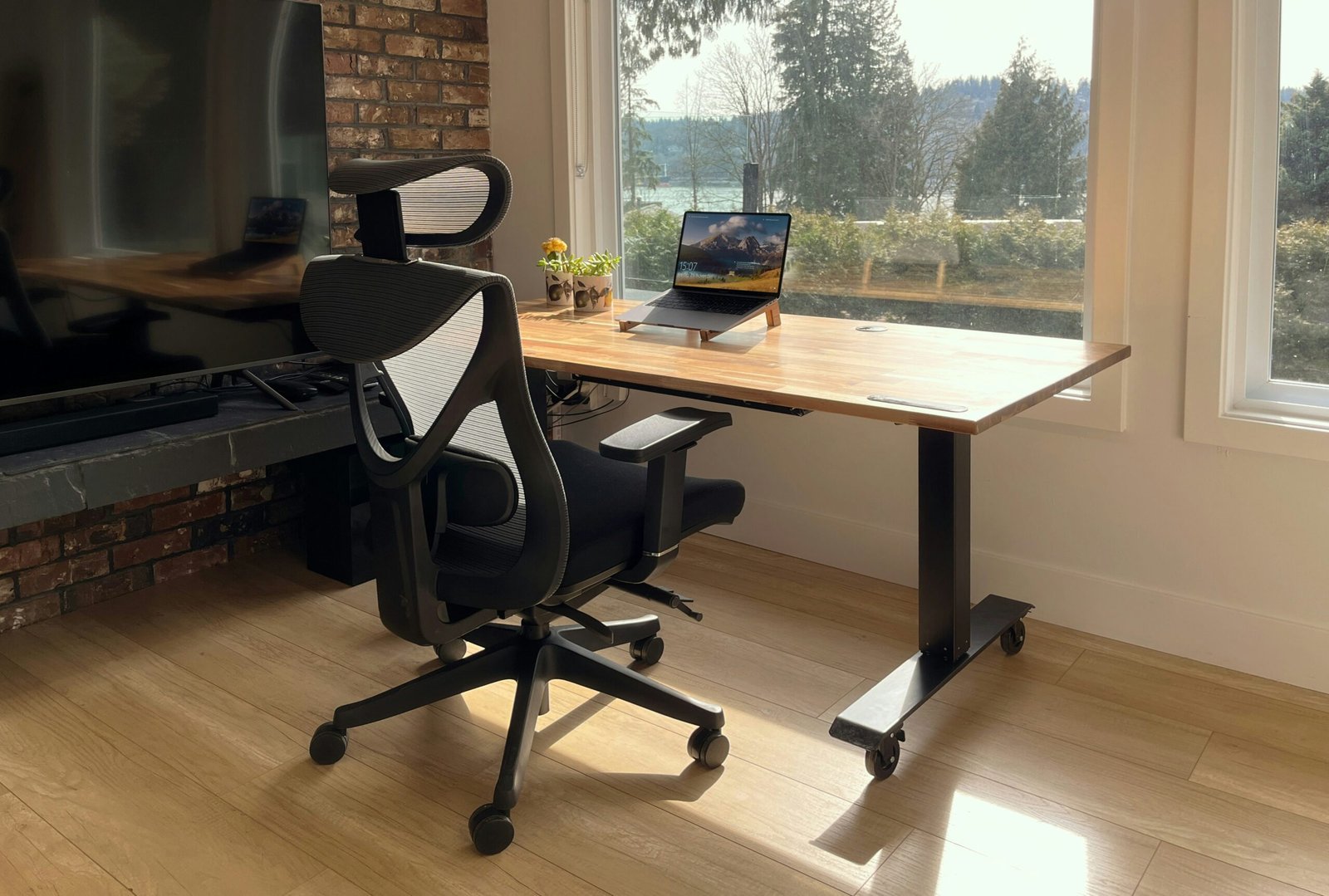
Standing desks — specifically height-adjustable sit-stand desks — let you alternate between sitting and standing throughout the day. That variety is the real benefit: changing positions improves circulation, reduces the stiffness of static posture, and many people report better energy and focus in the afternoon. It is the movement and choice that help, not standing all day (which brings its own fatigue).
The downsides are cost and, on cheaper models, stability. A good sit-stand desk costs more than a fixed desk, and budget models can wobble at standing height. If you want the flexibility affordably, our roundup of the best standing desks under $300 highlights stable options that do not break the bank.
Standing Desk vs Sitting Desk: Head-to-Head
Health
Advantage: standing desk — but only because it enables movement. A sitting desk with a great chair and hourly movement breaks can be just as healthy.
Cost
Advantage: sitting desk. Fixed desks are significantly cheaper and have no motors or mechanisms to fail.
Productivity
Roughly even. Some people focus better seated; others feel more alert standing. The ability to switch is what most users find valuable.
Stability and durability
Advantage: sitting desk, generally — though quality sit-stand desks are very stable. Cheap adjustable desks are the ones that wobble.
The Best of Both Worlds
You do not have to choose an extreme. A height-adjustable desk lets you sit most of the day and stand when you want to, capturing the benefits of both. Whichever you choose, the fundamentals matter more than the desk itself: screen at eye level, elbows at 90 degrees, and regular movement. Our full guide to setting up an ergonomic home office on a budget walks through getting every element right.
Which Should You Buy?
Choose a sitting desk if budget is tight, you want maximum stability, or you already move regularly through your day — and invest the savings in a great chair. Choose a sit-stand desk if you tend to feel stiff or sluggish when seated for hours, or if you simply like the option to change posture. For most remote workers who spend all day at a desk, an adjustable desk is a worthwhile long-term investment in comfort.
Frequently Asked Questions
Is a standing desk actually better for your health?
Standing desks help mainly because they encourage movement and posture changes, not because standing itself is superior. Alternating between sitting and standing is healthier than staying in either position all day. A sitting desk with good posture and regular breaks can be equally healthy.
How many hours a day should I stand at a standing desk?
There is no strict rule, but a common approach is alternating roughly every 30 to 60 minutes. Start with shorter standing periods and build up. Standing all day causes its own fatigue and leg strain, so balance is the goal.
Are cheap standing desks stable enough?
Quality varies. Budget sit-stand desks can wobble at full standing height, especially wider models. Look for a sturdy frame, a good weight rating, and crossbar support. Our under-$300 roundup focuses on models that stay stable.
Related reading: Deciding on a desk is just one step. Our complete home office setup guide walks through the full workspace, from chair to monitor to accessories.